
On-Site Solutions: A Day in the Life of a Power Field Service Technician
When power systems fail, the pressure is immediate. Facilities can’t afford downtime, and the people responsible for keeping power online need to act fast, think clearly, and solve problems on the spot. For skilled technicians seeking more challenges, independence, and direct impact, the power field service role offers a distinct career path.
Learn what a real day in the life of a power field service technician looks like, the satisfaction that comes from getting critical equipment back online in the field, and if this route is right for you.
The Role of Field Technicians
Power field service technicians work where mechanical systems and electrical controls come together. Each day brings new sites, new challenges, and new customers who rely on dependable power to keep their operations running.
Unlike shop-based roles, this position centers on on-site technician work. Technicians travel directly to customer locations and take ownership of diagnosing, repairing, and validating power generation systems in real-world conditions.
What the Job Looks Like in Practice
A typical day may include driving to multiple sites across a region, working independently while staying connected to technical resources and support teams. For example, the role of a Cat generator technician goes far beyond routine maintenance. It requires focus, judgment, and the confidence to make decisions on-site when time and uptime matter.
Common responsibilities of a power field service technician include:
- Diagnosing complex system issues: Identifying problems that involve both engine performance and electrical controls, such as voltage irregularities, sensor faults, or communication errors within generator systems.
- Performing critical mechanical repairs: Repairing diesel engines, cooling systems, fuel delivery components, and related accessories directly in the field.
- Testing and validating work: Conducting load bank testing, emergency transfer switch checks, and system run-ups to confirm equipment can perform under full demand.
- Documenting findings clearly: Writing detailed service reports that include voltage readings, amperage data, load test results, and recommendations for future maintenance.
- Following strict safety protocols: Adhering to electrical safety standards and manufacturer guidelines while working around live power systems.
Experience That Transfers
Experience with highway diesel engines, industrial engines, or advanced diagnostics can translate to this role.
Education and Training Expectations
An associate degree in diesel technology or power generation is helpful, but not required. Equivalent on-the-job experience is highly valued, especially for technicians who are comfortable reading schematics, interpreting fault codes, and approaching electrical systems as logical puzzles. If you have the aptitude and hands-on skills, a career in power field service may be a great move.
Why Become a Power Generation Technician?
Power field service work carries a different level of responsibility, and with that comes a deeper sense of pride. Learn more about why to choose us for your power generation career today.
The Hero Factor
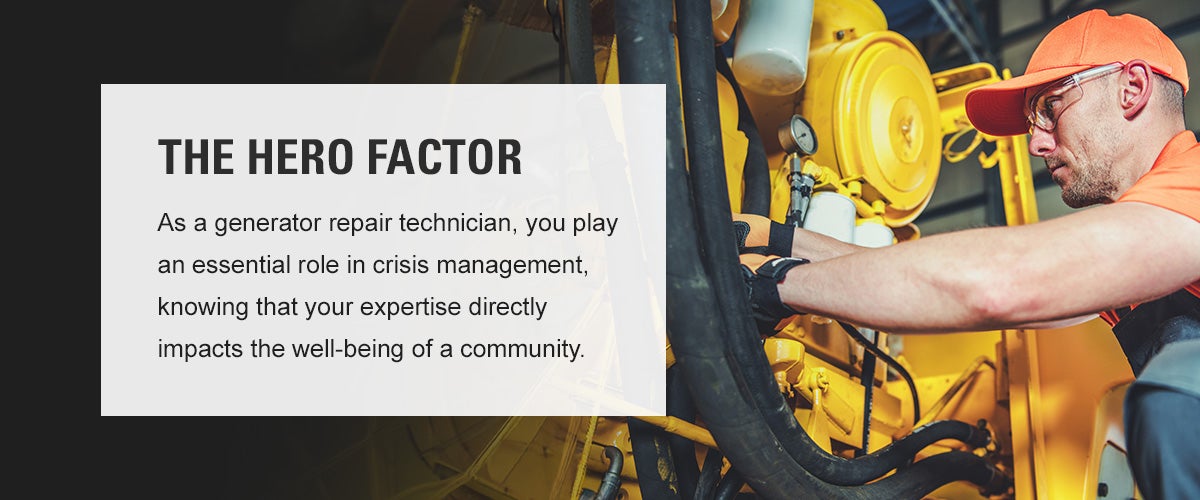
When a generator fails at a hospital or data center, it is not just an inconvenience — it's a crisis. Power technicians are the ones who restore stability, protect operations, and ensure people's safety. As a generator repair technician, you play an essential role in crisis management, knowing that your expertise directly affects the community's well-being. You will experience being the hero.
Career Rewards and Growth
Power generation maintenance offers a long-term opportunity for technicians who enjoy technical depth and independence. The following are key career rewards:
- Making a tangible impact: Your skills directly prevent downtime, protect revenue, and ensure important services continue uninterrupted.
- Mastering advanced diagnostics exposure: You’ll regularly work with modern control systems and electrical components, constantly expanding your knowledge and expertise.
- Enjoying career longevity: Power systems remain essential across industries and economic cycles, providing job security and long-term growth opportunities.
- Experiencing personal satisfaction: Seeing equipment return to full operation due to your expertise can be highly rewarding.
How Power Field Service Differs From Other Technician Roles
Power field service is a distinct role that requires a different mindset, broader system awareness, and comfort working in live environments where power reliability is essential.
Live Environments Instead of Controlled Shops
Power field service technicians work on systems that must operate under real-world conditions. This means you may face the following challenges:
- Active systems under load: Diagnosing issues while generators are connected to facilities such as hospitals or data centers, not sitting idle in a bay.
- Unpredictable environments: Working outdoors, on rooftops, or at remote sites where weather and access can affect the job.
- Immediate consequences: Recognizing that every decision has a direct impact on uptime, safety, and customer operations.
System-Level Thinking
While many technician roles focus on repairing individual components, power field service requires a broader view of how systems interact. This means understanding the following key areas of the job:
- Integrated diagnostics: Tracing faults across engines, control modules, sensors, and electrical connections rather than isolating a single failed part.
- Interpreting data in context: Using voltage readings, amperage data, alarms, and system history to identify root causes.
- Balancing mechanical and electrical logic: Applying diesel engine fundamentals alongside electrical troubleshooting without treating either as a separate discipline.
Accountability for Uptime, Not Just Repairs
Power field technicians help ensure that systems perform as needed. This level of accountability attracts technicians who take pride in ownership and dependability, not just task completion.
As a field technician, you’ll need to be able to:
- Perform load bank testing and transfer switch checks to validate real-world readiness.
- Determine when equipment is able to return to service.
- Communicate clearly with facility managers so they understand the system's status and next steps.
Return to our careers page to explore all opportunities or check out our careers blog to learn more.
Frequently Asked Questions
Below are common questions about power field service technician work.
What Is the Typical Day Like for a Power Field Service Mechanic?
A typical day involves independent travel to customer sites, performing preventive maintenance or emergency repairs on generators, and validating system reliability. Technicians often work directly with facility managers to review system history, conduct load bank testing, document electrical readings, and confirm readiness before leaving the site.
How Do Power Technicians Interact With Customers?
Power field technicians are often the primary point of contact during outages or stressful situations. They explain complex mechanical and electrical issues in clear terms and advise customers on maintenance steps to reduce future risk.
What Specific Challenges Do Power Field Technicians Face That Shop Technicians Don't?
Field technicians work in live environments where power loss has immediate consequences. They manage weather exposure, remote locations, strict security protocols, and high-stakes systems such as hospital backup power. The role requires confidence, autonomy, and strong decision-making without immediate shop support.
Apply for Cat® Power Systems Jobs Today
If you’re ready for more autonomy and a deeper technical challenge, power field service technician work offers a great opportunity. This role rewards problem-solving and mechanical expertise with long-term career growth.

 WARNING