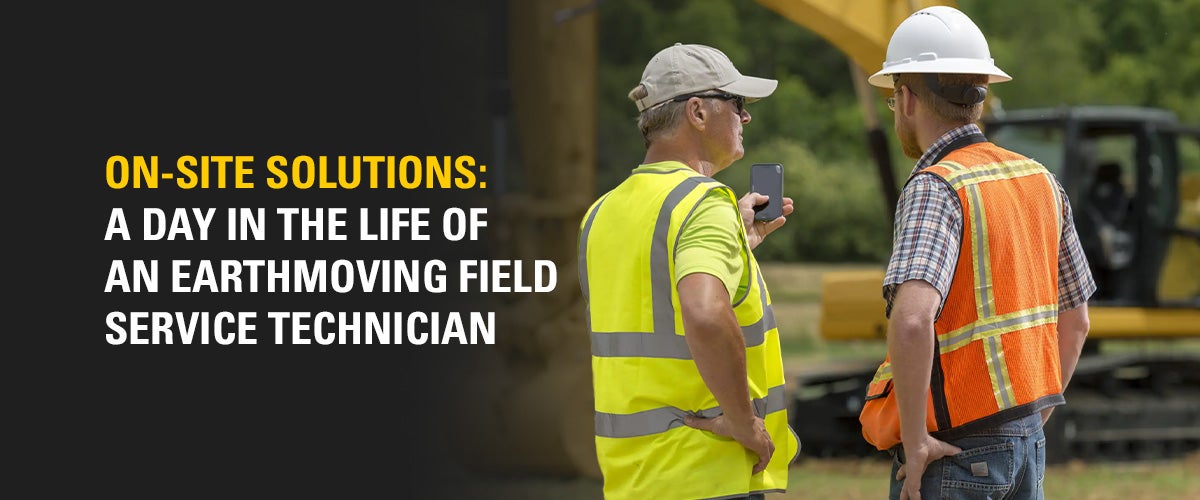
On-Site Solutions: A Day in the Life of an Earthmoving Field Service Technician
Every day brings a new challenge for a field service tech. The role of a heavy-duty mechanic is vital for getting clients' machines back up and running quickly to minimize downtime and keep projects on track. When you work as an earthmoving field service technician, you become a master problem-solver, working with your client and their heavy equipment so they can get back to work.
This article gives an inside look at the field service tech role, so you can learn more about the demands of each workday and how rewarding it is to help construction equipment owners with their problems.
Learn more about the growing demand for heavy equipment techs today.
Get Ready for the Day
A typical day in the life of a service tech starts not in the office, but in your service truck. Start your day with pre-inspections and ensure your service truck has any tools or parts for the jobs you have scheduled for the day.
You'll review your jobs list, paying attention to any emergency assignments. If there aren't any emergency jobs, you get to start preparing for your workload for that day.
Drive to the Jobsite
As a field mechanic, you get to explore all kinds of different places. Whether it's traveling to a client's jobsite or a forestry landing, there are many varied sites you'll travel to.
Your service truck is more than just a way to get to work. It's a state-of-the-art mobile workshop, with high-tech tools, diagnostic computers, and an inventory of parts at your disposal. You have the responsibility to look after your truck, but also the freedom and autonomy to take charge of every day.
Diagnose Your Client's Equipment Issues
When you arrive at your client's site, you'll have the opportunity to meet with them and identify problems with their machine. You may meet the owner of the construction company or work directly with the operators themselves. It's essential to be a good listener and ask the right questions to investigate the issue. For example, you'd ask them about what they've tried so far to troubleshoot the problem. This conversation provides a starting point for where the issue may be, before you start a full inspection.
Modern construction machines use the latest technology, and this means you'll complete the first part of any inspection using a laptop and any onboard software to check for error codes or events. From here, you'll be able to narrow down what you think the issue is and the best way to solve it. You can then go back to the client and discuss the solution with them.
Perform a Field Service Repair
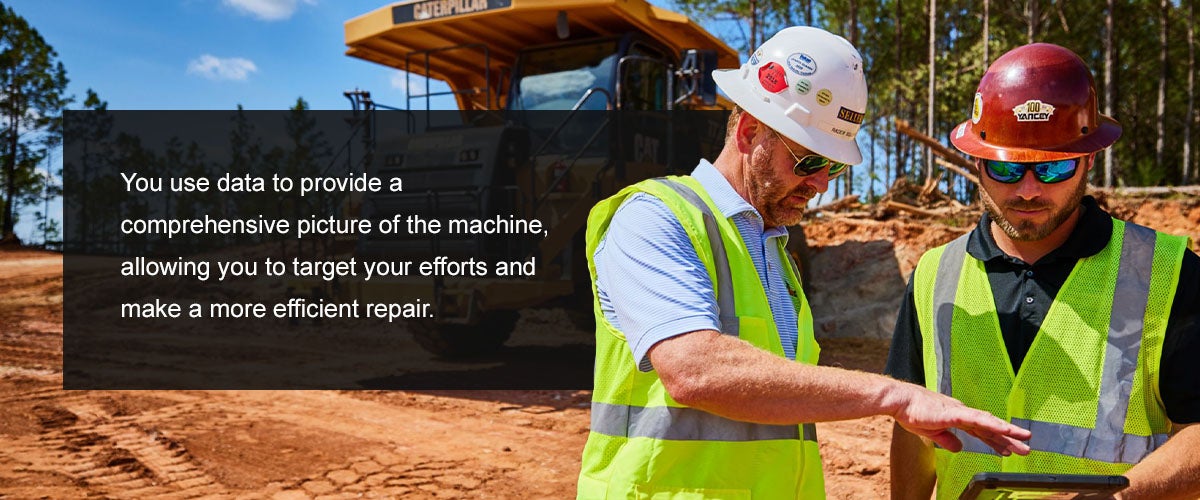
Once your client approves your plan, it's time to apply your repair skills. A successful field repair relies on your ability to use digital diagnostics and mechanical skills. You use data to provide a comprehensive picture of the machine, allowing you to target your efforts and make a more efficient repair.
Here's an example of a repair you might have to make in the field. The client has a wheel loader that is experiencing a howling sound coming from the cylinders on the hydraulic system. Your process may look something like this:
- Start with an app like Cat® Inspect or similar.
- Search the serial number to find the right machine.
- Take four pictures of each side of the loader.
- Next, get in the cab and plug your computer into the machine, unless it is an older, mechanical system.
- Look for any error codes or events to give you pointers on what might be wrong with the machine.
- Perform a leak-down or drift test.
- Check the pressures on the hydraulics.
- Next, check the cycle times by operating the loader.
- Using the pressure readings and information you've gathered, you find that the sound is not coming from the hydraulic lift cyliders but is instead coming from the main valve body. There are a few components within the main valve that you need to test.
- Take the old valves out and check them for any physical signs of damage.
- You find damage, so you place your order for the replacement parts.
- Drive back to your local branch and pick up the parts.
- Return to the site and install them.
- Check if the problem is solved.
- Write up reports.
The Payoff
Fixing your client's problem is much more than checking off your to-do list. Your repair means your client can get their machine back to work, saving them from the consequences of downtime. There can be an immense feeling of satisfaction from knowing you helped a business get its heavy equipment fixed. You may also feel pride in helping to keep the construction equipment moving to build key infrastructure in your region.
The moment you bring a machine back online, you become the hero of the jobsite. Often, you are the last resort to keep a workday going.
The Ideal Candidate
With each day bringing you more machines to repair, clients to meet, and sites to visit, a field service technician requires a range of skills.
Heavy equipment service technician jobs typically require some of the following traits:
- Good at problem-solving
- Strong communication skills
- Enjoy fixing things and working with your hands
- Enjoy driving and traveling
- Like working in a client-facing role
- Confident technical and repair skills
- Independent
There are certain prerequisites you'll need for this role, like prior technical courses in diesel technology, as well as hands-on heavy-duty mechanic experience. A field service tech is highly skilled, and you will need to know how a modern diesel engine works. You'll also work on various components from transmissions to final drives.
Take the Next Step in Your Field Service Technician Journey
Each day in the life of a service tech offers new challenges. In your service truck, you have the opportunity to build new relationships, sharpen your problem-solving skills, and keep industries moving. This role can be truly rewarding for someone who likes finding solutions to heavy equipment repairs and servicing.
Peterson Cat is hiring earthmoving field technicians in Oregon, northern California, and southwest Washington. We have decades of experience as a Cat dealer, serving various industries since 1936. Explore our field tech roles today and find out more about the advantages of working with us, from competitive pay to career progression opportunities.
 WARNING